
Taste of Tech Seminar: Energy-efficiency and Performance Innovation of Semiconductor Chips: Opportunities, Challenges, and Future Perspectives | A Call for Collaboration: Organic Materials in Semiconductor Devices and Manufacturing
Time and Date
1/12/2025
11:45 AM – 1:00 PM (EST)
Agenda
Lunch: 11:45 – 12:00 Talk 1: 12:00 – 12:20 Talk 2: 12:20 – 12:40 Networking: 12:40 – 1:00
Talk 1: Energy-efficiency and Performance Innovation of Semiconductor Chips: Opportunities, Challenges, and Future Perspectives
Presentation Overview: The rapid development of the nanoelectronic industry over the past decades has relied on the process of transistor scaling to provide significant improvements to transistor performance at a reduced cost. Multiple directions have been pursued to extend the semiconductor industry’s growing trend, including searching for new material systems, designing new transistor structures, demonstrating new functionalities, and developing new applications. The semiconductor chip has two main elements: active devices (i.e., transistors) and interconnects. As for active devices, new 2-D materials (MoS2, WS2, BN, etc.) are all aggressively studied to realize high energy efficiency and memory/logic functions for system compactness. While these breakthroughs often capture the spotlight, their success is fundamentally enabled by semiconductors—the invisible backbone of modern electronic systems.
This talk will present the current status and possible application developments in nanoelectronics and nanomaterials. After a brief introduction, the general nanoelectronics for device applications are discussed. We will explore the challenges posed by device scaling, circuit complexity, cybersecurity vulnerabilities, and the transformative opportunities presented by artificial intelligence, quantum computing, and novel materials. By addressing these hurdles and harnessing emerging technologies, semiconductors will continue redefining the trajectory of electronics and expanding human achievement horizons
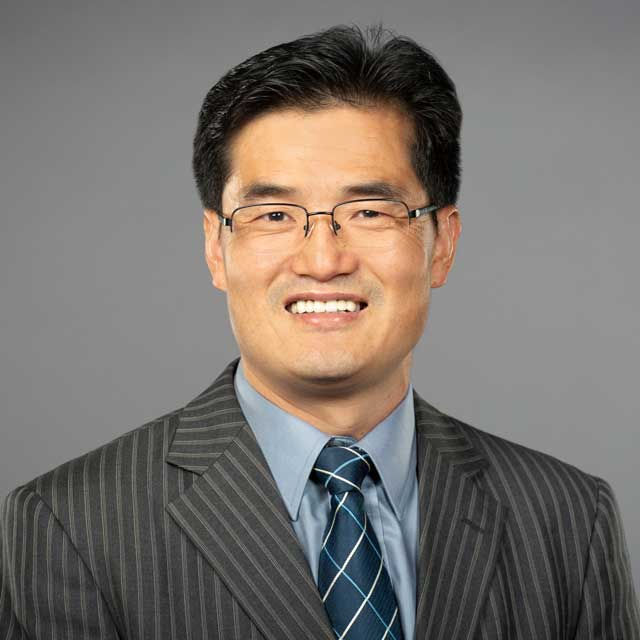
Jeongwon Park
About the Speaker
Dr. Park is a professor at the Department of Electrical and Biomedical Engineering at the University of Nevada, Reno (UNR), NV, USA, and he joined UNR in July 2019. Prior to that, he was an Associate Professor at the School of Electrical Engineering and Computer Science at the University of Ottawa, Canada (2016-2021, currently Adjunct Professor) and a scientist at SLAC National Accelerator Laboratory, Stanford University, USA (2014 -2016). For six years (2008-2014), he served as a senior technologist to support the corporate chief technology officer (CTO) and business units at Applied Materials, USA. In addition, he has been a guest researcher at the Lawrence Berkeley National Laboratories (2005-2008), an adjunct professor in the Department of Electrical Engineering at Santa Clara University (2009-2016), and a visiting scholar in the Department of Electrical Engineering at Stanford University, CA, USA (2013-2014). He received his Ph.D. (2008) in materials science and engineering from the University of California, San Diego, USA. He is a senior member of IEEE and the National Academy of Inventors.
Talk 2: A Call for Collaboration: Organic Materials in Semiconductor Devices and Manufacturing
Presentation Overview: I will describe recent developments in soft materials and their potential applications in semiconductor science. I hope to inspire FSI members to collaborate with the polymer science community at UF.
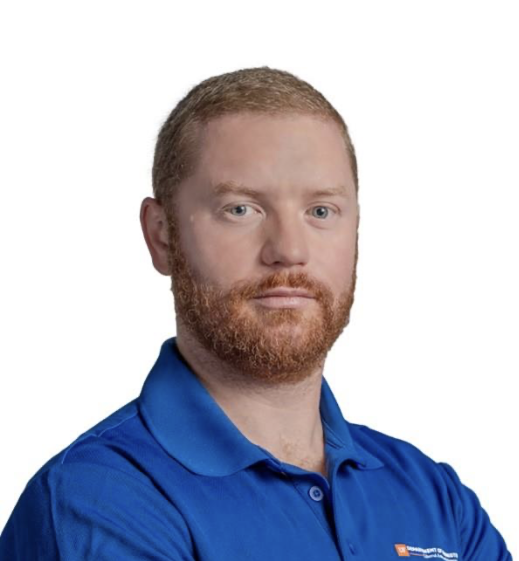
Austin Evans
About the Speaker
Austin M. Evans is an organic materials chemist who is interested in controlling soft-matter at multiple length scales concurrently. Specifically, his research is targeted at designing materials to enhance environmental, energy-storage, and electronic technologies using both covalent and non-covalent approaches. Austin is passionate about chemical education, which led him to create a scientific writing course at the University of Florida. Prior to joining the faculty at the University of Florida, Austin was a Schmidt Science Fellow at Columbia University where he studied organic electronic materials with Latha Venkataraman and Colin Nuckolls. Austin completed his PhD under the direction of William R. Dichtel as an NSF Graduate Research Fellow at Northwestern University, where he developed new methods to control two-dimensional polymerization. Austin originally hails from Oklahoma, where he earned his undergraduate degrees at the University of Tulsa. Outside of the lab, Austin enjoys hiking, kayaking, and appreciating the Florida wilderness.